
A Conversation with Marcel Vidovic: CE5, Contact Work and the night a being came out of the light

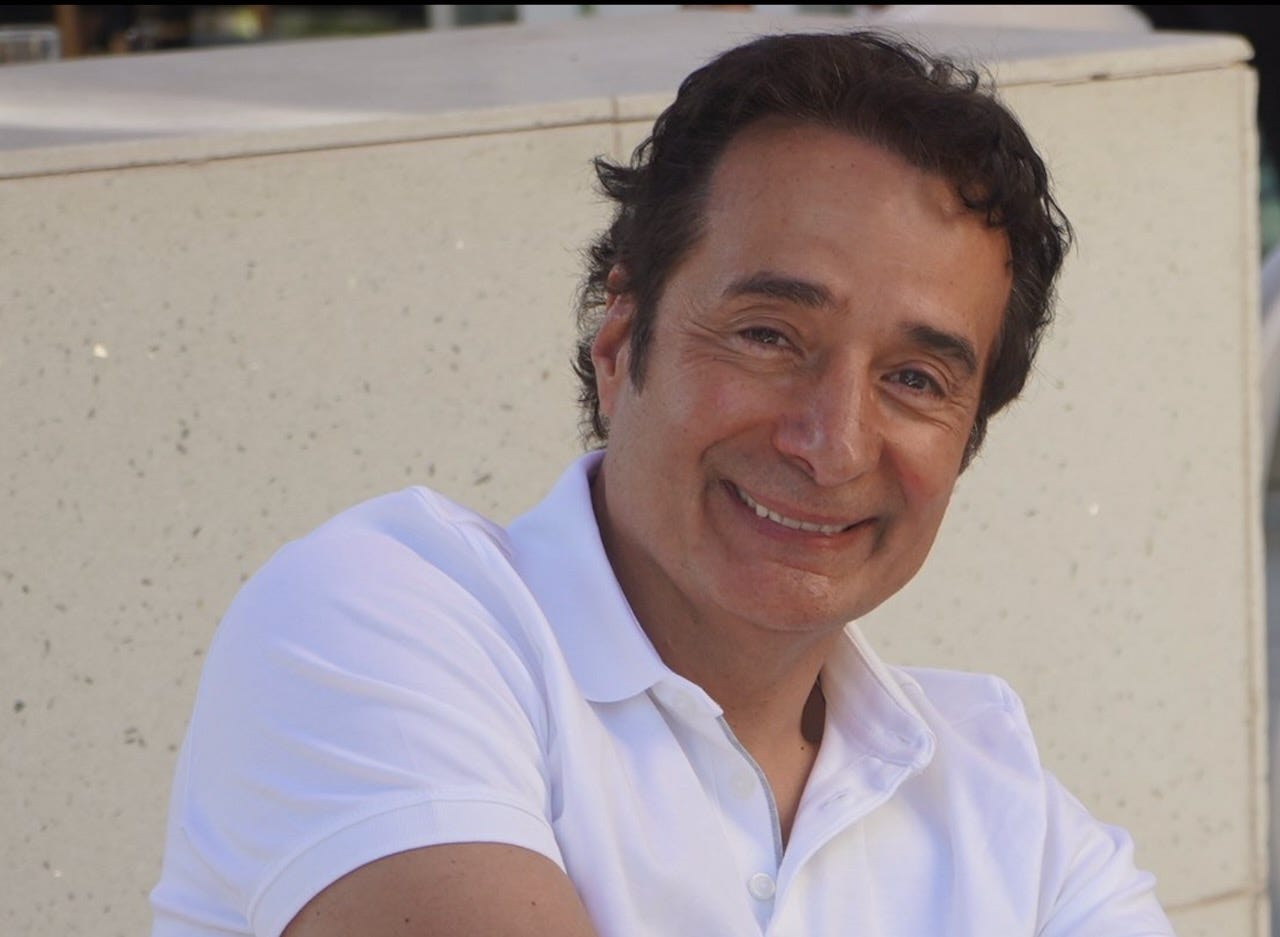
Twenty Years of Searching… Then Two Minutes That Changed Everything
Joe: How did you get into CE5 (Close Encounters of the Fifth Kind)?
Marcel: For me, it was a kind of longing, a seeking. I think it ties into an awakening process that was probably happening for around 20 years, without me really realising what it was about. I was busy with work, had a child, and the people around me — friends, family, neighbours — were never into consciousness, meditation, or anything of that nature. Very 3D. So, I never had anyone I could compare my feelings with, or who resonated with this type of work.
It got to the point where I started doing research on the internet, which is what most people do starting off — you try to grab everything you can. You find a lot of great things, but unfortunately, there’s a lot of misinformation out there, too. At that point in my life, I couldn’t discern what was real, and what wasn’t — and that’s okay, because that’s how you get started.
During my research, I came across Dr Greer. I’d seen his YouTube videos, probably going back ten years before that, but I was always fixated on the UFO and disclosure angle. Even if he was talking about consciousness, I wasn’t paying attention to that part — it didn’t resonate. My mind just wasn’t open to it yet.
Fast forward about a decade, and the calling got really, really strong. I came back to his website and saw that he was holding expeditions. I read up about it, thought it was fascinating, sat on it for a bit — and then during the holidays, when things slowed down with work, I went back on his website. I’d actually gone to see the film Interstellar in Chicago with my cousin around that time, and something about that just triggered something in me — one of those little pivot points. So, after that, I went back to Greer’s website, started researching the expedition, and saw he had one in Vero Beach, Florida, in January 2015. I thought, you know what, I’m just going to sign up for this. I don’t care. So, I put in all my information, hit send — and got back: Sorry, full.
I was so bummed out. It had taken so much nerve just to sign up, because basically you’re going to take off for a week, and you have to explain that to your spouse, your coworkers, your friends — people who know nothing about contact work. Back then, it was never mainstream. So, the disappointment was overwhelming. But it said I could put my name down as a backup, so I did — nothing to lose.
Then, on January 1st or 2nd, I got an email notification. Someone had cancelled. There was an opening. I dropped everything, scrambled to enter all my information, hit send, and received back: Congratulations, you will be attending the expedition in Vero Beach. I was like, Oh my God!
The next challenge was telling family, coworkers and taking a week off work so I can go look for UFOs with this guy. So, I coined it as a business trip. I travelled a lot for work, so it wasn’t unusual.
Joe: What happened when you got there?
Marcel: We met Dr Greer, went out into the field, and started with meditation. Everyone is in a circle. I’d never meditated in my life, so I just closed my eyes and tried to be calm — but my mind was going crazy, monkey brain fully activated, and I kept opening my eyes and looking around while everyone else was in deep meditation. I’m thinking, okay, what exactly did I get into here?
After maybe 20 minutes, we came out of the meditation, and Greer started asking if anyone had had any experiences. People started volunteering things — feelings, visions; one person said they’d visited the Intergalactic Council — and it was all so far out there. I’m sitting thinking, this is not what I anticipated. This is not what I was expecting at all. But I stayed with it.
The next night, we went out under the stars, meditated, sat quietly — and then all of a sudden this light came out of the sky and dropped straight down, almost like a spider dropping from its web. It stopped over the water — we were facing east, toward the Atlantic — got really bright, pulsed, then disappeared. It wasn’t a meteor; a meteor shoots across the sky. This thing went vertically, flashed, and was gone. I was just like, Oh my God, what is this?
Within maybe ten or fifteen minutes, two military people with flashlights came walking down the beach. They came straight to the spot where the light had dropped and started shining their flashlights over the water. Two military personnel, in the middle of January, in exactly that location. I mean, what’s the coincidence?
The following night — Tuesday — I was getting more into it by then, socialising, asking questions. Just before the puja was about to begin, this golden ship just materialised and started pulsing. And then a second one appeared beside it. For maybe two minutes, these crafts were just there. A lot of people have seen our YouTube video, but that video is so heavily compressed that it doesn’t do it justice at all. We also had dozens of photographs taken with high-definition Sony and Canon cameras with quality lenses — at night, everything comes out in colour with cameras like that. No one who has ever analysed the footage has asked for the originals. They’ve all worked from the YouTube version, which is another story entirely.
But you had to be there. No hostility, no fear — just a peaceful, connected feeling. My hair stood up. I had goosebumps. I was in complete awe. I come from a scientific background; I need things to be factual and evidence-based, and I needed something of that magnitude to convince my brain. And then the second ship manifested next to it and started pulsing. For those two minutes, it was just the most incredible experience — we’re here; they’re supporting us. That changed my life forever. I went down the rabbit hole and have been making contact ever since.
Below is a video Marcel took in Arizona last year.
CE5 Isn’t Just About Sightings — It’s About Awakening
Joe: You’ve talked about the consciousness aspect, and I think that’s something people really struggle to understand when you try to explain CE5 to them — it’s that consciousness piece that speaks volumes. You mentioned it changed your life — in what sense?
Marcel: In the sense of validation. There’s very little solid evidence of life after death, no empirical proof that our consciousness continues after we die. And at that point in time, there was no mainstream acknowledgement of extraterrestrials either. This experience shifted something fundamental — it said: we are not alone; there is definitely something beyond my physical body, and this is not it. That was a comforting realisation, knowing this isn’t it.
And then your mind starts opening up to the reality of things. It becomes impossible to believe that this universe — or multiverse — happened purely by chance; that life emerged from dust and then simply ends. For some people, the seeds that are planted grow quickly. For me, it took years. But once you’ve had an experience like that, you become incredibly thirsty for knowledge — you go to conferences, read books, try to consume everything. And that’s where you must be careful, because ufology has been heavily infiltrated by the intelligence community for decades. A lot of what you read in books and see in films is designed to promote a fear factor — alien wars, abductions, cattle mutilations. Think about it: we’re talking about beings with technology so advanced they could extract any biological information they needed without ever coming to Earth. The idea that they’re mutilating cattle is just prehistoric thinking. As you develop the conscious part of yourself, your discernment kicks in, and you start to see through it.
In my experience, these beings are not hostile. They’re willing to communicate if you open your mind and your heart through meditation and consciousness — that’s where the connection is made. A lot of people go out into the field and think I want to see some aliens. Do you think they’re going to stop what they’re doing to come and entertain you? The pure intent is what matters. That’s where the manifestation happens — like we had in Joshua Tree.
From Intuition to Instrumentation: A Scientific Expedition
Joe: What are the best conditions or locations for a CE5? What would you suggest to someone just starting out?
Marcel: I’ll generalise; some people have contact right outside their window in the middle of a city. But the best results come from remote areas — low light pollution, away from other people who aren’t in the same mindset. You also want locations that don’t interfere with your instruments, because what we do is essentially a scientific expedition. We validate what we’re seeing and experiencing with Tri field meters, radar detectors, and lightning detectors. Your mind is picking something up, and you’re seeing something, but at the same time, your instruments are responding to it too. So, it’s a validation — it’s not just in your head. If you’re just starting out, find an area away from city lights and other people, and you’ll have a better chance of having an experience. But keep in mind this is not an absolute — I know people who’ve been woken up in the middle of the night, told to go outside, and filmed incredible things going over their house.
Joe: I was really pleased when we were out with our group in Joshua Tree — I was watching the flight path App, Ricky had the radio, someone else had a Trifield meter. Can you tell us a bit more about those instruments and how they help with the validation of things?
Marcel: Sure. The primary one would be the Trifield meter, set to magnetometer mode, which measures very sensitive magnetic fields. In a remote area, once it stabilises, it’ll set to zero. When something is happening — often before you can see anything — the needle starts moving and making noise. What’s fascinating is that they communicate through the equipment. The needle will move in sequences, like a telegram signal: one, two, three, four, five — pause — one, two, three, four, five. And it can be selective. I might be standing next to Dr Greer, his Tri field meter going off, mine doing nothing. If it were a man-made signal — a cell phone, for example — both would activate. That’s not what happens. We’ve had meters going off during meditation with nothing visible in the sky, meaning they’re nearby but aren’t fully manifested, so they communicate through the instruments instead. You know they’re in proximity, so you keep doing the work, keep meditating, making contact in consciousness, and invite them to join if it’s safe and appropriate.
The lightning detector basically measures high-voltage electrical fields in the atmosphere. The only thing that should trigger it is lightning. But I’ve been out in the dry, arid desert at night and had mine start firing off strikes — ten miles away, it says, seek cover. There is no lightning anywhere in the region. At the Joshua Tree contact event in 2016, when a massive ship came over the group, I had dozens of strikes registering. Mine goes up to a range of 50 miles, and the counter only goes up to 99 — I’ve exceeded that in a single night. When crafts come in, they produce electrical fields that activate them.
A laser is important both for pointing out the direction of an object to the rest of the group, and for signalling our location to the craft — a light signal to let them know where we are, in addition to our thoughts during meditation. You never point a laser directly at an object; you always circle around it. Pointing a laser at an aircraft is illegal in the US — a $10,000 fine and up to ten years in prison.
Some people use handheld radios, too. You must be careful with those, because they can pick up a lot of frequencies even in remote areas, but when your radio starts receiving signals in a clear sequence — 15 chirps, pause, 15 chirps — that’s something worth noting.
And then the camera, which is the most important tool for documentation. I use the Sony A7 IV — mirrorless, excellent in low light. Sony was the first to develop mirrorless cameras, and I think mirrorless is the future — smaller, lighter. Nikon and Canon have also come up with some very strong mirrorless options now. You want a camera with good low-light capability. For the body, you’re looking at around $2,000–$3,000, though you can find capable models under $1,000 that will still do a decent job.
For lenses, spend the money on a good lens. The lens makes everything. I’m partial to prime lenses — fixed focal length, not a zoom — because the aperture is going to be significantly better. A quality prime might give you f/1.2 to f/1.4, which means a lot of light coming in. On a zoom lens, you’re typically at f/3 or f/4. The smaller the aperture number, the more light, and the less you need to push your ISO, which is just a digital setting that brightens the image but introduces pixelation and noise. So, you want the aperture wide open, and ISO kept low.
I carry a range from 20mm wide-angle up to 80mm, but my go-to is the 50mm. The 20mm captures a broad sweep of sky, which is great when you don’t know where activity might develop — the trade-off is you won’t get close-up detail, but you won’t miss something happening off to the side either. Once you get into 85mm or zoom lenses, you have to be very precise when something is moving. If a craft is traversing the sky, you’ll find yourself hunting for it in the frame and losing it. The 50mm is the sweet spot — close enough for good resolution, wide enough to stay on target.
One other thing on the focus: I never rely on the LCD screen. I always use the viewfinder, get right in there, and really work that focus manually. Some photographers put a little tape on the focus ring to lock it in place once they’ve got it. I’ve never done that — I just wish Sony would add a lock button. It would make things a lot easier.
Joe: Something I picked up when we were out together — you wouldn’t necessarily have the camera recording all night. You’d keep it close and react quickly when something was happening.
Marcel: Yes, and that comes down to instinct. When you’re in that mindset, and your consciousness is open, something will just say — out of a clear blue — get up and point the camera northeast. I’ve done that so many times and captured something as a result.
The practical reason is simple: if you record for four hours and capture 20 seconds of activity, reviewing that footage is an enormous task. I’d rather have ten one-minute clips I know are worth watching. So, when I feel something building, I get up quietly — I position my chair so I can move without disturbing anyone, and I make sure there’s no equipment in the way. I power the camera on, thumb goes straight to record before I’ve even found the object, loosen the ball head, sweep to the object, and I’m recording. Start to finish, maybe three seconds, sometimes more. That’s the instinct you develop over time.
That said, sometimes I’ll leave it running for 20 minutes because I can feel something is concentrated in one area of the sky — like at Joshua Tree, where the activity kept occurring in a very specific, narrow part of the sky. You read the situation. If the crafts are traversing or coming in low, you have to be mobile. If the activity is fixed, leave it running.
Lake Taupō: When the Being Stepped Out of the Light
Joe: All the tech and equipment are so important — I still get pushback when I talk to people. From the cameras to the lightning detectors to the recorders, there’s so much evidence out there when you’re in the field. And people still say, " Oh, they are satellites, weather balloons...
Marcel: Look, if the mothership came and landed in the field, some people in the group still wouldn’t see it and would dismiss it. Their mindset simply couldn’t accommodate it. I’ve had incredible experiences where several people witnessed the same thing clearly, and someone else standing right there had no idea what we were talking about. I think the ETs work with people who are open and ready for it — and those who aren’t simply aren’t going to see it. It’s the intent, I think, that allows you to have the experience.
Early on, I used to get very upset trying to convince people — look at the photographs, look at the equipment data, that’s not a flare. Eventually, I realised I don’t need to convince anyone. The experience I’ve had is wonderful. I can share it with people it resonates with — great. If it doesn’t resonate, no big deal. It’s not my loss. If I can inspire someone to go out and do the work themselves and they can expand on it, that’s what it’s all about.
Joe: It’s very personal to the individual, isn’t it?
Marcel: Incredibly personal. Believe it or not, it’s a very personal experience. Especially when you have ground contact — or when someone in the group has telepathic communication with beings that are on board. That’s specific and localised to that person because they’re open, and they have that line of communication. It’s really quite amazing to witness.
Joe: Conscious of time here, but there was one experience you mentioned during the trip — making contact with a being. Could you tell us about that?
Marcel: Yes — that would be the one in New Zealand. Lake Taupo, 2016. A private expedition, about 20 people, beautiful, remote setting near a lake. There was a large retreat facility with a Merkabah laid out in cement on the ground below — we did our contact work right in the centre of it.
We were in meditation — it was cold, I had a heavy padded coat on — when I felt a firm but gentle squeeze on my shoulder. I thought someone in the group was trying to get my attention. I looked up. Nobody was there. But simultaneously, I had this really wild feeling — euphoric, peaceful, loving. And what’s significant is that whenever I’m out in the field, and we’re about to make contact, that same sensation comes back. It’s become a signal to me. I think that moment in the circle opened something up.
Later, as people were wandering after we broke, my friend Jeremy called me over to the edge of the woods and said, “Do you hear this?” He and another person were hearing clicking sounds. Now, I’d been on multiple expeditions by that point and had never been able to hear these clicking sounds, even when others could, and our Tri field meters were going off. But this time — I heard them straight away. Clear, rhythmic, almost like a little communication. I tried to rationalise it: branches moving in the wind, leaves, something natural. But it was too distinct.
Then I saw a small shimmering light about ten feet into the trees. Jeremy said, “Do you see that?” I knelt down and opened my arms in a receptive posture. The light got brighter and started moving toward me. And instead of fear, I just let go completely. I said to myself: I’m ready for this, whatever it is. My fear just dissolved.
The little being came right up and gently squeezed my thumb. The feeling — you genuinely cannot put it into words. Such love, such emotion. I teared up. I was grinning from ear to ear and just thinking, " This is the most incredible experience I’ve ever had. And then a second being came forward and squeezed my index finger on my right hand. For that moment, nothing else existed.
They were transparent light beings, roughly two feet tall. Completely gentle. And then within a second or two, they just started drifting back and disappeared. But they left me with such an incredible feeling — this is what it’s all about. This was the personal contact. After that, my whole mindset shifted — away from the dramatic sightings and toward meditation, consciousness, and that personal relationship. When I do contact work now, I always invite those beings back, whether they’re the ones from the golden ships or the little beings from New Zealand — I refer back to those experiences every time.
Joe: That’s incredible. Thank you for sharing that.
Joe: And do you think something specific about that night made it possible? Did you do anything to invite them in?
Marcel: I think the shoulder touch during the meditation opened something up in me. And then hearing the clicking sounds for the first time — that was significant. Something shifted. In previous expeditions, I couldn’t hear them at all, and now I could. I think I’d opened up enough that they sensed it, and the communication was made. The other key thing was the fear dissolving completely. When something unknown moves toward you in the dark, every instinct says run. But mine was the opposite — I felt like a little child, grinning, completely open. I think they sensed that loving, curious, vulnerable intent. That’s the only way I can rationalise it.
Beyond the Field: Love, Telescopes, and the Next Expedition
Joe: Amazing. Well, that’s a wonderful place to end. Actually, just before we do, CE5 is an opportunity to meet some incredible people, and there are some amazing people I’ve met. You proposed to your wife, Lera, through CE5, is that right?
Marcel: Yes, I did. — at a small private Dr Greer event at his property in Hillcrest, Virginia. Lera always sets up the puja table for Dr Greer, so while she was busy, I slipped the ring to Dr Greer, and he placed it on the table. Only a couple of the volunteers knew. When Greer was about to begin the puja, he picked up the ring and said, “Who left this here? Must have manifested.” Everyone’s looking at each other — what? Whose ring? Then I got up, took the ring, got down on one knee, turned around, and proposed. At a CE5 event, it couldn’t have been more fitting.
Joe: That is so cool. Thanks for sharing that! Say hello to Lera from me.
And when you’re not doing CE5, you’re into astrophotography?
Marcel: Yes — you can actually see my telescope in the background there. I’ve been having a software issue with it that’s been difficult to sort, and work has been really busy, so I haven’t had a chance to fix it yet. But astrophotography ties in beautifully with CE5 — capturing galaxies and deep sky phenomena just reinforces how vast the universe is and how many possibilities exist out there. I have a shed all set up with heating for night photography. Once the weather improves and I get that card sorted, I’ll be back at it. So those are really my only two hobbies — CE5 and astrophotography. The rest is work and renovating the house.
Joe: Don’t work too hard. And is there still any talk of the Machu Picchu trip?
Marcel: I haven’t heard anything from those guys lately — we’ve all been busy with the holidays, and I’ve got the New Zealand trip coming up. Sarah’s getting married in May, so we’ll be at her wedding. But I still think people are interested in doing a Machu Picchu trip, and I think we should eventually make it happen. I’ll reach out to some of the members and see who’s still up for it. Even if it ends up being next year, it doesn’t matter — we need to go there at some point.
Joe: Well, I’m in! That sounds brilliant. And you mentioned you have the video from our trip?
Marcel: Yes, I’ll put it up on my YouTube channel, and you can grab it from there. I’ll include my YouTube and website links in the email as well.
Joe: Perfect. Cheers, Marcel — really enjoyed that. For me personally, having these conversations gives me so much more confidence going into CE5, seeing what opens up when you commit to the work. Thank you so much for your time.
Marcel: My pleasure. This was fun. Take care — talk soon!
Marcel is a CE5 practitioner, astrophotographer, and long-time volunteer with the CE5 contact initiative. He has participated in several dozen expeditions across the US, New Zealand, and beyond.
If you liked this please check out my previous blog where I joined Marcel in Joshua Tree and we made contact with the same ETs in the video above.
References and links to Marcels work below
https://humaninitiatedcontact.com/